The best dog isn’t the most popular breed—it’s the one whose needs match your lifestyle.

Understanding Your Dog Begins Before You Bring Them Home

Every breed was developed for a purpose. Those instincts don’t disappear just because a dog becomes a family pet. Understanding what your dog was bred to do is one of the most powerful ways to prevent behavior problems before they begin.

Explore Breed Groups


Breed influences behavior—but it doesn’t define the individual.

Why Breed Matters

Although every dog has a unique personality, genetics provide the foundation for many natural behaviors. Herding, retrieving, tracking, guarding, digging, and companionship are not simply learned behaviors—they’re instincts shaped over hundreds of years of selective breeding.
Understanding those instincts allows us to work with our dogs instead of constantly working against them.


Instincts

Breed influences natural drives such as herding, hunting, guarding, retrieving, and companionship.

Energy

Some breeds are content with moderate activity, while others require significant physical and mental exercise every day.

Temperament

Confidence, independence, sociability, sensitivity, and persistence all have genetic influences.

Learning Style

Every breed learns, but different breeds were selected to solve different kinds of problems, affecting how they approach training.


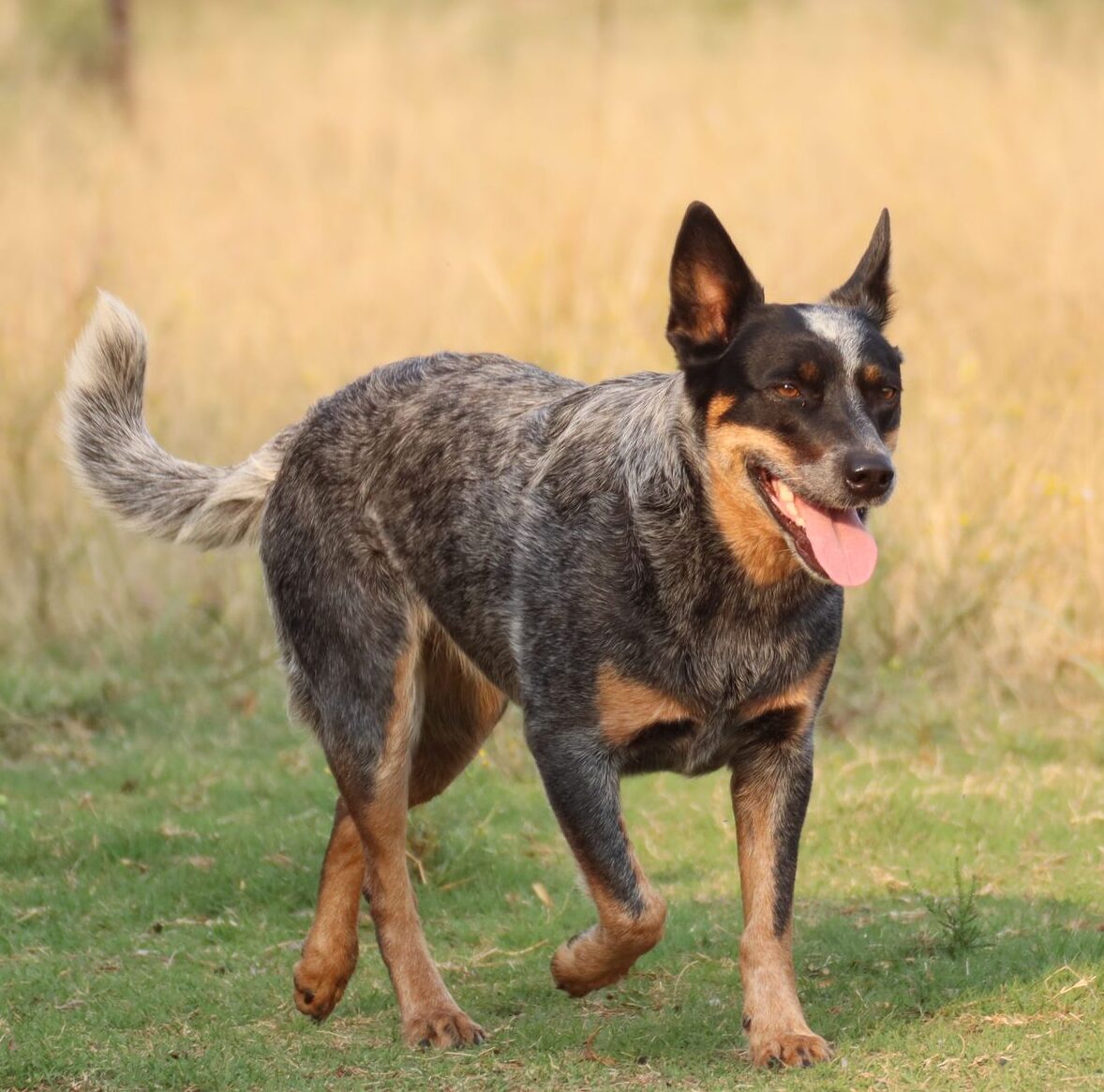
Blue heeler dog running freely in a grassy farm landscape on a sunny day.

Breed Groups

Originally developed to move livestock.
Common characteristics:
Extremely intelligent
Highly trainable
Thrive with mental challenges
Sensitive to movement
Need a job or purpose
Good fit for:
Active families, hiking, dog sports, experienced owners.
Examples:
Border Collie, Australian Shepherd, German Shepherd, Collie, Shetland Sheepdog.

Originally developed to work alongside hunters.
Characteristics:
Friendly
Cooperative
Highly social
Enjoy retrieving
Eager to please
Examples:
Golden Retriever, Labrador Retriever, English Springer Spaniel, Brittany.

Developed to track game by scent or sight.
Characteristics:
Independent thinkers
Strong prey drive
Curious
Persistent
Can become completely focused on scents
Examples:
Beagle, Bloodhound, Basset Hound, Greyhound.

Bred for guarding, pulling, rescue, and protection.
Characteristics:
Powerful
Intelligent
Confident
Loyal
Need consistent leadership and purpose
Examples:
Rottweiler, Boxer, Doberman, Bernese Mountain Dog.

Originally developed to hunt vermin.
Characteristics:
Fearless
Determined
Energetic
Digging
Chasing
Examples:
Jack Russell Terrier, West Highland White Terrier, Scottish Terrier.

Developed primarily for companionship.
Characteristics:
Affectionate
Alert
Adaptable
Strong attachment to people
Examples:
Cavalier King Charles Spaniel, Papillon, Pomeranian.

A diverse collection of breeds with varying histories.
Characteristics vary considerably depending on the bree


Beyond Breed

Every Dog Is an Individual
Breed provides the foundation, but every dog is shaped by:
✓ Genetics
✓ Early experiences
✓ Socialization
✓ Health
✓ Environment
✓ Learning history
✓ Individual personality
No two dogs—even littermates—are exactly alike.


Matching Dogs to Your Lifestyle

Instead of asking:

“What’s the best breed?”

Ask:

“Which breed’s needs best match my lifestyle?”

Excellent
Cavalier King Charles Spaniel
Maltese
Greyhound
French Bulldog

Less suitable
Border Collie
Belgian Malinois
Great Pyrenees

Excellent
Labrador Retriever
German Shorthaired Pointer
Australian Shepherd
Vizsla

Excellent
Golden Retriever
Labrador Retriever
Cavalier King Charles Spaniel
Standard Poodle

Excellent
Belgian Malinois
Dutch Shepherd
Border Collie
Cane Corso


Common Misconceptions

High energy doesn’t mean hyperactive.
Often it means the dog’s mental and physical needs aren’t being fully met.

Independent doesn’t mean stubborn.
Many breeds were intentionally developed to think and solve problems on their own.

Protective doesn’t automatically mean aggressive.
Protection instincts require thoughtful socialization and training.

Small dogs still need training.
Companion breeds benefit from clear communication and healthy boundaries just as much as large breeds.


Choosing a Puppy or Rescue

Whether you’re working with a breeder or adopting from a rescue, look beyond appearance.

Consider:
Your daily schedule
Exercise availability
Grooming needs
Financial commitment
Experience level
Family lifestyle
Living space
The goal isn’t to find the “best” dog—it’s to find the best match.


The Right Match Makes Everything Easier

Choosing a dog whose instincts fit your lifestyle is one of the best ways to build a successful relationship. If you’re unsure which breed is right for your family—or want to better understand the dog you already have—I’d be happy to help.

Schedule Consultation