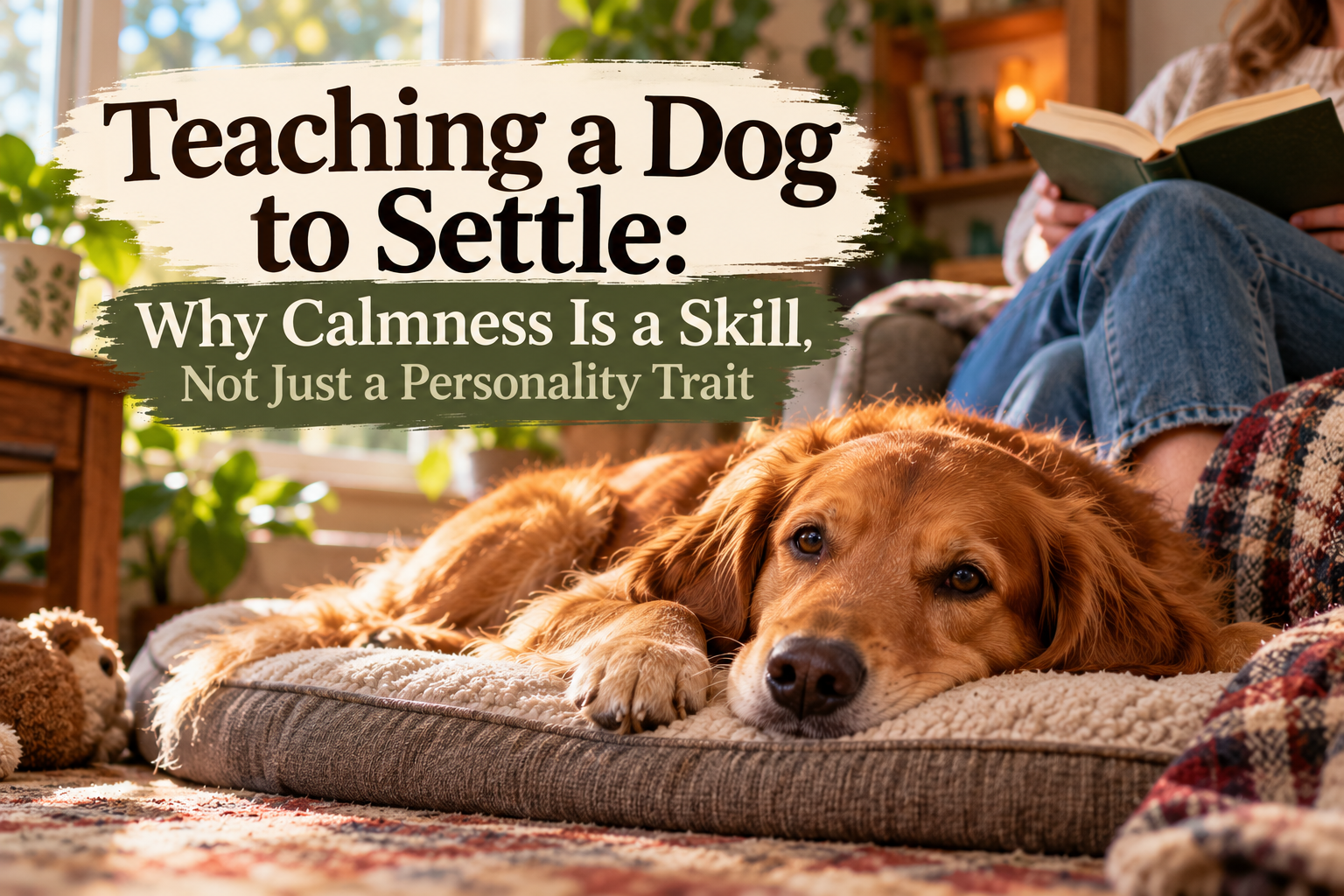
Teaching a Dog to Settle: Why Calmness Is a Skill, Not Just a Personality Trait
Teaching a Dog to Settle: Why Calmness Is a Skill, Not Just a Personality Trait
Helping dogs learn that they don’t always have to be doing something.
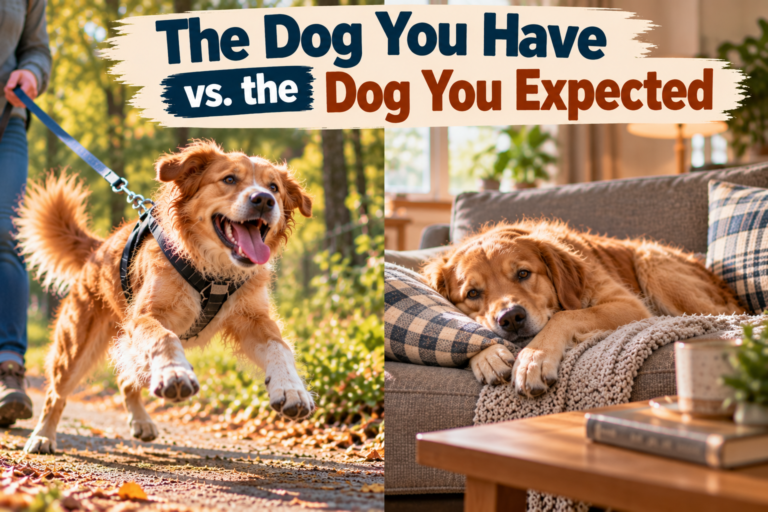
Some dogs seem to have an off switch.
They play, explore, greet visitors, and enjoy their walks. Then, when nothing particularly interesting is happening, they curl up somewhere comfortable and go to sleep.
Other dogs seem to be constantly looking for the next activity.
They follow their owners around the house, investigate every movement, bring toys repeatedly, or struggle to relax even after a long walk.
It’s tempting to describe these dogs as having too much energy.
And sometimes, they do need more appropriate physical activity or mental enrichment.
But there’s another possibility worth considering:
What if your dog hasn’t learned how to settle?
Being Tired and Being Calm Aren’t the Same Thing
One of the most common approaches to an energetic dog is to provide more exercise.
A longer walk. Another game of fetch. An extra trip to the park.
Exercise is important. Dogs need opportunities to move, explore, and engage in activities they enjoy.
But physical exhaustion isn’t the same thing as emotional regulation.
A dog can be tired and still have difficulty settling.
In fact, some dogs become increasingly restless when they’re overtired or overstimulated.
Think about a young child who has missed a nap. Being exhausted doesn’t necessarily make them calm.
Dogs aren’t children, of course, but the comparison illustrates something useful: the ability to rest isn’t determined by energy expenditure alone.
Why Some Dogs Struggle to Relax
There isn’t one explanation for every restless dog.
Breed tendencies, age, temperament, environment, learning history, and physical comfort can all play a role.
A young adolescent dog may have difficulty controlling impulses.
A dog bred for demanding work may be especially motivated to seek activity.
A dog living in a busy household may find it difficult to disengage from everything happening around them.
And a dog who has learned that following their owner or repeatedly offering behaviors produces attention may continue doing exactly that.
Sometimes restlessness is also related to stress, discomfort, or an underlying medical issue.
That’s why it’s important not to assume every dog who struggles to settle simply needs more discipline.
Understanding the cause helps us choose an appropriate response.
Calm Behavior Can Be Reinforced
We tend to notice our dogs most when they’re doing something.
They jump up. We respond.
They bark. We respond.
They bring us a toy. We respond.
But when they’re lying quietly, we often leave them alone.
There’s nothing inherently wrong with that. Resting dogs should generally be allowed to rest.
Still, it means we may overlook opportunities to reinforce the behaviors we’d like to see more often.
Imagine your dog chooses to lie down near you while you’re reading.
You quietly place a treat beside them without asking for anything.
Over time, those peaceful moments can become more rewarding.
The important detail is to reinforce the calm behavior without creating excitement.
If delivering a reward causes your dog to leap up, wiggle enthusiastically, and begin offering tricks, you may need to adjust how and when you reward.
The goal isn’t to turn relaxation into another performance.
It’s to help your dog discover that being calm can be comfortable, safe, and worthwhile.
Teaching a Settle Behavior
A designated resting spot, such as a mat or comfortable bed, can help make relaxation more predictable.
Start somewhere quiet, without major distractions.
Step 1: Introduce the resting spot
Place a comfortable mat or bed on the floor.
Allow your dog to investigate it.
Reward voluntary interest in the mat, such as approaching or stepping onto it.
You don’t need to force the dog into position.
Step 2: Encourage relaxed positions
As your dog becomes comfortable with the mat, reward behaviors such as sitting or lying down on it.
Gradually begin favoring relaxed body language over excited activity.
A soft posture, resting hips, or comfortably lowering the head can all be useful signs.
Step 3: Build duration gradually
Instead of rewarding every second, slowly increase the time between rewards while your dog remains comfortable.
Start with very short intervals.
If your dog gets up, simply make the next attempt easier.
The goal is to develop a behavior your dog can succeed at, not to test how long they can tolerate frustration.
Step 4: Introduce a cue
Once your dog is reliably choosing to relax on the mat, you can introduce a verbal cue such as “settle” or “relax.”
Say the cue as your dog begins the familiar behavior.
With practice, the cue can become a useful signal that it’s time to rest.
Step 5: Practice in different environments
A dog who settles comfortably in the living room may not immediately understand how to do the same thing when visitors arrive.
Begin with small changes.
Practice in another room, while you move around nearby, or during quiet everyday activities.
Gradually introduce more challenging situations while keeping expectations realistic.
Remember that a mat is a training aid, not a guarantee that a dog will feel relaxed in every environment.
Give Dogs Something Worth Settling Down For
Sometimes the easiest way to help a dog relax is to make the environment more conducive to relaxation.
That might include a comfortable resting place away from household traffic, predictable routines, appropriate opportunities for exercise, and activities that encourage quieter engagement.
Chewing, licking, and food puzzles can help some dogs transition into calmer activities, although their effects vary between individuals.
Sniffing walks and opportunities to explore can also contribute to a dog’s overall enrichment.
The important thing is balance.
A dog needs more than constant entertainment, but they also need more than an expectation that they should remain quiet all day.
A fulfilling life includes both activity and rest.
Don’t Confuse Stillness With Relaxation
There’s another distinction worth making.
A dog who remains motionless isn’t necessarily comfortable.
Some dogs become still when they’re frightened, overwhelmed, or uncertain.
Others may remain in place because they’ve learned that moving results in unpleasant consequences.
That’s why we should look beyond whether the dog is technically staying on the mat.
Are their muscles relaxed?
Is their breathing comfortable?
Can they disengage from nearby activity?
Do they appear willing to remain there?
A relaxed dog and a dog who is afraid to move may look superficially similar, but they’re having very different experiences.
Our goal should be genuine comfort, not simply the absence of movement.
Know When to Look Deeper
If a dog suddenly becomes restless, struggles to sleep, pants excessively at rest, or seems unable to get comfortable, a veterinary evaluation may be appropriate.
Pain, illness, anxiety, and other conditions can affect a dog’s ability to settle.
Training is valuable, but it shouldn’t replace investigating a possible health or welfare concern.
Likewise, dogs experiencing significant distress when separated from their owners may need a more specialized approach than ordinary settle training.
The Value of Doing Nothing
We spend a lot of time teaching dogs to do things.
Sit. Stay. Come. Walk beside us. Leave it.
But one of the most useful things we can help them learn is that sometimes nothing needs to happen.
They don’t have to investigate every sound.
They don’t have to participate in every activity.
They don’t have to remain constantly engaged with us.
They can simply rest.
That doesn’t happen because we’ve eliminated their natural instincts or made them less enthusiastic about life.
It happens because we’ve helped them develop another useful skill.
A dog who knows how to settle isn’t necessarily a dog with less energy. They’re a dog who has learned that rest is an option, too.
And that can make everyday life more comfortable for both of you.
Bark to Basics Dog Training
Helping people understand what their dog has been saying all along.